Heating a Toowoomba Home: Reverse Cycle vs Gas vs Panels
Toowoomba’s Garden City label only tells half the story. Summer days are warm, but winter mornings regularly drop below freezing and frost is common. The best heating decision is usually the same decision that handles your cooling: one reverse-cycle split system, sized correctly for both duties, installed by a team that understands Downs homes.
Garden City winters: why heating matters here
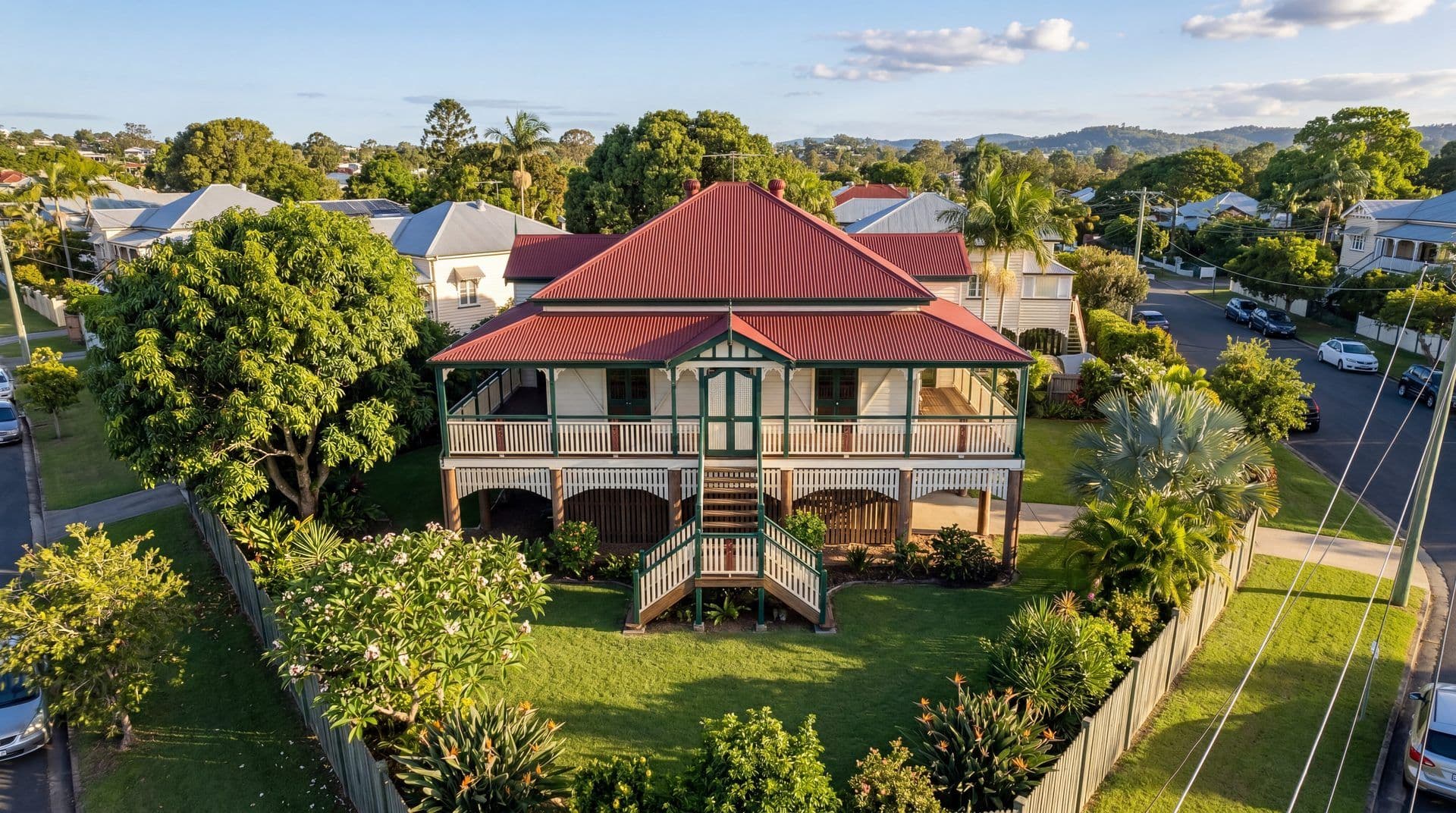
Toowoomba sits on the edge of the Great Dividing Range at roughly seven hundred metres above sea level. That elevation gives it cooler nights than Brisbane or the Gold Coast, and older homes — weatherboards, pre-insulation brick and elevated Queenslanders — lose heat quickly. The result is a heating season that can run from May through September, with morning temperatures sometimes below minus five degrees. Any system chosen only for summer cooling will be exposed when winter arrives.
One system for both duties: reverse cycle explained
A reverse-cycle split system uses the same refrigerant circuit to cool in summer and heat in winter. In heating mode it extracts warmth from the outdoor air and transfers it inside. Even on cold mornings there is enough ambient heat for a modern inverter unit to operate efficiently. The big advantage in Toowoomba is simplicity: one outdoor unit, one or more indoor heads, and a single system that covers the whole year. There is no separate heater to maintain, no gas connection to worry about, and no portable panels to store once spring arrives.
Sizing for heating demand, not just the room size
In Brisbane the cooling load often decides the unit size. In Toowoomba, heating demand is usually the limiting factor. An undersized unit will still cool on a thirty-five-degree day — it may run longer than ideal, but it will cope. On a minus-two morning, an undersized heater cannot magically make more heat. Correct sizing looks at: - Insulation, ceiling height and window area - Construction type: weatherboard, brick veneer or double brick - Orientation and how much sun the room gets in winter - The coldest overnight temperatures the system must handle A unit sized for winter will be slightly larger than one sized only for summer, but it will start faster, run more efficiently on cold days and last longer because it is not working at maximum output all winter.
Inverter logic and cold-snap performance
Inverter-driven compressors adjust output instead of switching on and off at full blast. In a Toowoomba winter that matters because: - The unit ramps up quickly to recover from overnight temperature drops. - It throttles back once the room is warm, maintaining temperature without the energy spikes of a fixed-speed unit. - Defrost cycles are handled smoothly, reducing the cold draughts some older systems blow during icy mornings. A fixed-speed unit, by contrast, runs flat out until the thermostat is satisfied, then stops. The room cools, it restarts, and the cycle repeats. That start-stop pattern uses more energy and creates less even temperatures.
Reverse cycle vs gas ducted vs electric panels
Every heating option has trade-offs. In Toowoomba the comparison usually comes down to upfront install complexity, running efficiency and how evenly each option warms the home. - **Reverse-cycle split system:** Highest efficiency for the heat produced, lower running energy per kilowatt-hour of heat, room-by-room control, and no gas bill. Best when the unit is sized for winter. - **Gas ducted heating:** Fast, even warmth through the whole house, but requires a gas connection, duct runs, annual servicing and is less efficient than reverse cycle when both heating and cooling are needed. - **Electric panel heaters:** Cheap to buy, easy to move, but one unit of electricity creates roughly one unit of heat. They are the most expensive to run for whole-home heating and only warm the room they sit in. For most Toowoomba homes, a reverse-cycle split system ends up the simplest year-round choice because it handles summer and winter with one installed system.
New builds: the builder-network advantage
Installing a split system during construction avoids the hardest part of retrofitting: running pipes and cables through finished walls and ceilings. Our builder network works with Toowoomba and Highfields construction teams to put the indoor head, pipework, drain and cable in place at frame stage. That means no wall chasing, minimal patching, and the outdoor unit can be positioned exactly where it needs to be before landscaping, fencing and driveways limit access. New-build installs are typically faster and cleaner than retrofits, and the system is ready for handover.
12-Month Workmanship Guarantee
Every Chillin installation is backed by our guarantee. Hisense 7-year manufacturer warranty included.
Is a split system warm enough for Toowoomba winters?
Yes. A correctly sized reverse-cycle split system is designed to deliver rated heating capacity even on frosty Toowoomba mornings. The key is sizing the unit for both summer cooling and winter heating duty — an undersized unit will struggle when the temperature drops below zero.
Why does heating demand matter more than cooling demand in Toowoomba?
Toowoomba summers are warm but the real stress on an undersized system comes during cold snaps. A unit sized only for cooling will run continuously in winter, use more energy, wear out faster and still leave rooms cold. Heating capacity should drive sizing in the Garden City.
Are panel heaters cheaper to run than reverse cycle in Toowoomba?
For the same amount of heat, a reverse-cycle split system typically uses roughly one-third to one-half of the electricity a resistive panel heater uses. Panel heaters convert one unit of electricity into one unit of heat, while a reverse-cycle unit moves heat from outside and can deliver three to four units of heat per unit of electricity used.
Can a split system be installed during construction of a new Toowoomba home?
Yes. Through our builder network we install split systems during the construction phase, running pipework and cabling at frame stage before walls are lined. This is cleaner, faster and avoids the access challenges of retrofitting into a finished home.