

What Happens During a New-Home Ducted Rough-In?
Before plaster goes on, Chillin plans indoor-unit placement, duct paths, return air, drains, refrigeration routes, and future service access.
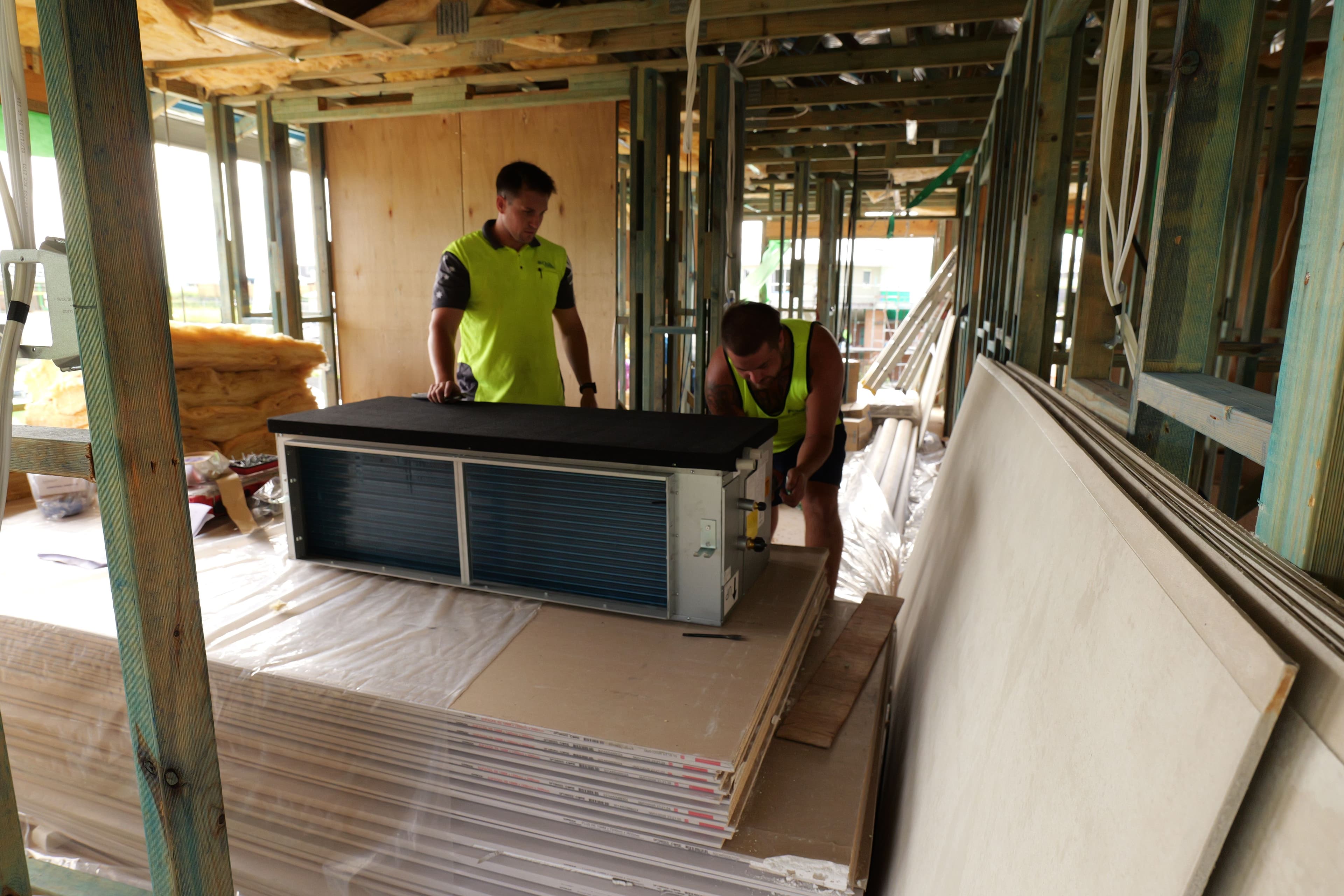
A ducted system is won or lost before the ceiling is closed. The finished homeowner sees vents, controllers, and comfort. The rough-in stage is where the airflow, access, drainage, and system layout are actually set up.
The frame tells the truth
At frame stage, the team can see the roof space, trusses, wall cavities, access points, and layout constraints. That is the moment to confirm where the indoor unit should sit, how the ductwork should run, and whether the selected equipment suits the home.
What gets checked before plaster
- ●Indoor-unit position and future service access
- ●Outlet and return-air locations
- ●Duct routes, bends, and airflow restrictions
- ●Drainage path and fall
- ●Refrigeration pipe routes
- ●Electrical supply and controller locations
Those checks are practical, not theoretical. A duct run that looks simple on a plan can become noisy, inefficient, or hard to service if the site details are ignored.
Why builders care
For builders, rough-in quality affects rework, handover, and customer confidence. A tidy rough-in means fewer late questions, fewer access issues, and a cleaner path to fit-off.
If you are planning a new home or repeat builder project, send the plans through early. Chillin can help check the air conditioning and electrical scope before the expensive stage.